
Self storage
Keep track of a storage unit
A storage unit is easy to fill and hard to search. You're paying every month for the space, so it's worth knowing exactly what's in it and where.
Leave an aisle
Pack along both side walls and the back, and leave a walkway down the middle. Without an aisle, anything behind the first row is out of reach for good. Put the things you'll want soonest near the door.
Map the unit
Split the unit into zones, like left wall, back wall and right wall, and note which boxes go in each. Take a photo of each wall once it's packed. That photo and a list answer "is it even in storage?" before you drive over.
Pack for long storage
- Use bins or strong boxes of the same size so stacks stay stable. Heavy boxes go at the bottom.
- Keep boxes off the floor with pallets or a shelf if the unit isn't climate-controlled.
- Don't seal electronics or papers in plastic bags. Trapped damp causes mildew.
- Check what your facility doesn't allow, such as food, paint or fuel.
Keep an inventory at home
Number every box and write down what's in it, with photos if you can. Keep the list on your phone, not in the unit. Also check whether your renters or home insurance covers things in storage. Some policies limit off-site coverage, and the facility may ask you to buy its own. An inventory with photos makes any claim much simpler.
Review it every few months
A storage unit costs the same every month whether you use it or not. A quick look at the inventory each season shows what you can sell, donate or bring home, and whether you still need the unit at all.
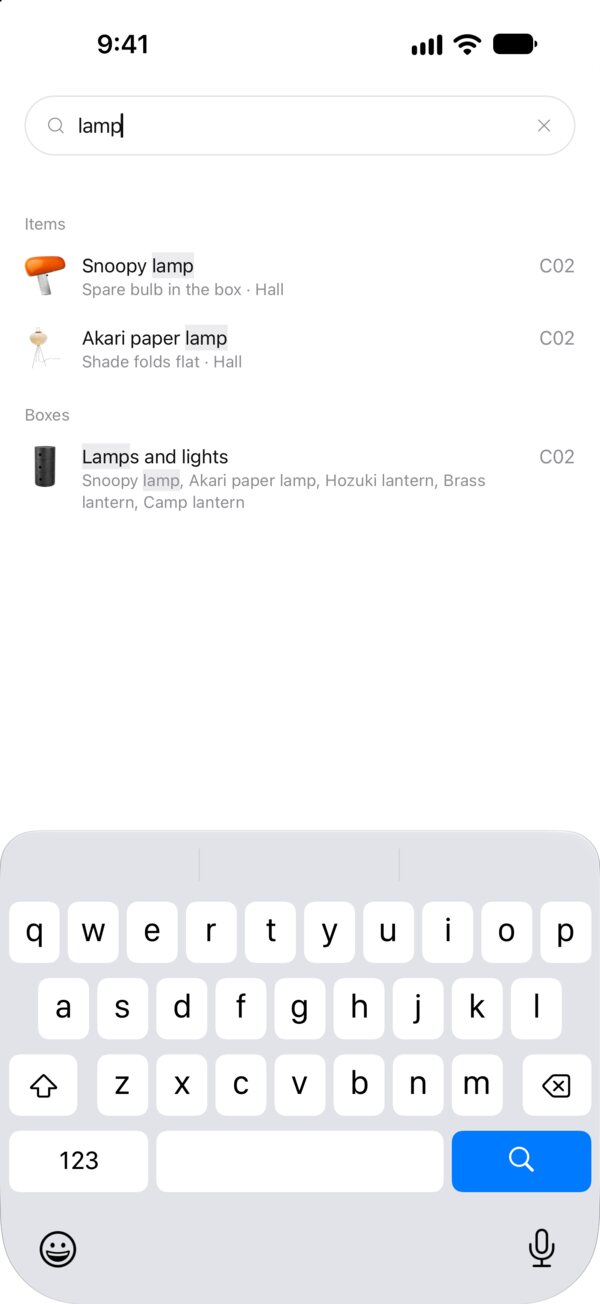
Know what's in storage without the drive
Photograph each box and its contents in BoxRay and set its location to your unit. Then search "lamp" from home and see which box it's in.
Download on the App StoreFree for your first five boxes. iPhone and iPad.